


AI is reshaping the solar industry for everyone from homeowners and installers to grid operators
and manufacturers. From producing solar panels and installing them to managing solar in
homes or on the grid, the changes AI delivers can save money, increase efficiency and increase
resilience.
AI for Consumers
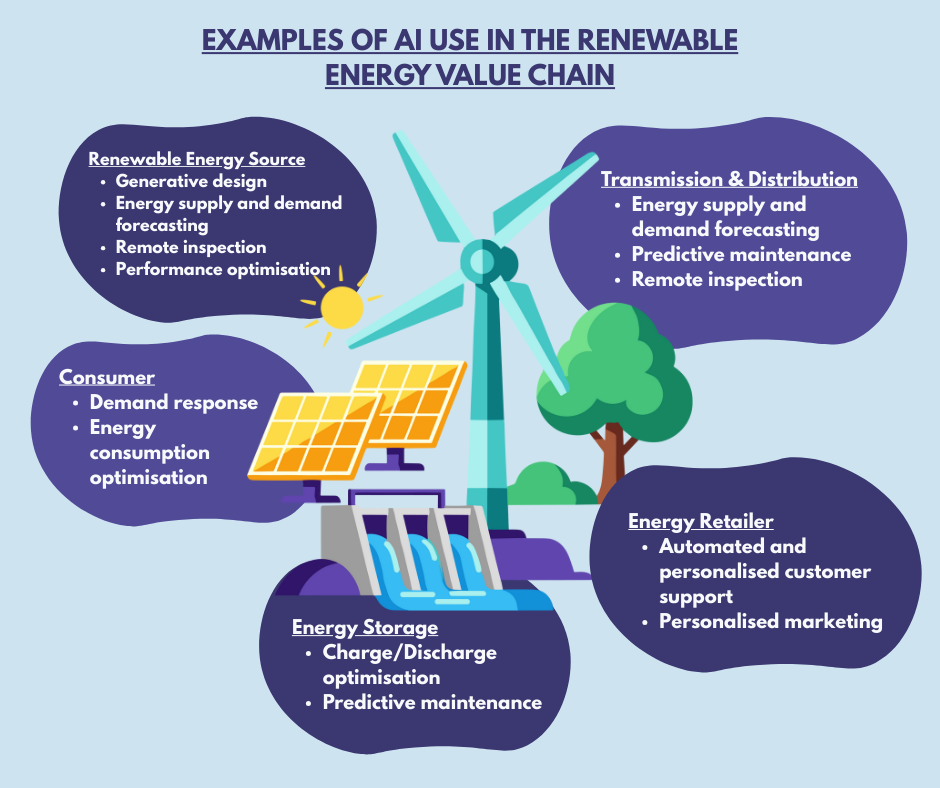
For homeowners or other consumers with solar panels, AI facilitates smart home energy optimization by balancing energy production and usage. It makes it easier to automate management of home appliances, store energy in batteries or even sell extra power back to the grid, according to Lucent Energy Management. AI algorithms can identify inefficiencies such as shading or dirt accumulation, suggest solutions such as cleaning, and ensure that solar battery systems store or release energy at the best times. For example, AI can analyze weather patterns and solar panel performance, then adjust usage. When solar energy production is high, AI can run appliances such as dishwashers or washing machines. When production is low on a cloudy day, AI can delay usage of appliances or adjust temperatures in cooling systems. AI systems can also improve system performance by monitoring solar panels, inverters and other components quickly to detect problems. For example, a sudden drop in energy production could signal a malfunctioning panel or inverter. An alert enables faster resolution of issues, reduces downtime and prevents costly repairs. AI can differentiate between minor issues that can be resolved remotely and major problems that require on-site intervention, Regen Power noted. It can predict when an inverter might require replacement based on its historical performance or operational lifespan. Homeowners can schedule maintenance proactively, preventing unexpected failures and maintaining high efficiency.
AI for Grid Operators and Utilities
Many of the same AI capabilities that homeowners use can be scaled up to support utilities and large solar asset owners. AI product developer Omdena said using AI for site selection can help developers avoid choosing sub-optimal land or layouts with terrain, shading, grid access or land use issues. The analysis can make site design more efficient by reducing the time required for planning by up to 50 percent, and the landowner can save costs by reducing land usage by 8-12 percent.
One of the biggest challenges once panels are installed is weather variability, consulting firm Navigate Power observed. “AI excels at analyzing complex weather data by using satellite imagery, ground-based weather stations and historical production data to identify patterns invisible to human analysts.” Grid operators can integrate solar power better when they accurately predict production levels.
Even small faults in inverters or PV panels can cascade into significant downtime or yield loss, yet many solar asset owners still rely on scheduled inspections or reactive fixes. Many still use manual inspections, which struggle to detect tiny cracks, soiling, hotspots or wiring faults that can cause hidden losses and safety hazards. Analysis by the World Economic Forum showed that using AI for maintenance in solar projects could increase productivity by 25 percent and reduce breakdowns by 70 percent, which can cut costs and increase system availability. AI drone systems now have an inspection accuracy of 98 percent for defect classification, which enables operators to detect and fix faults before they affect yield.
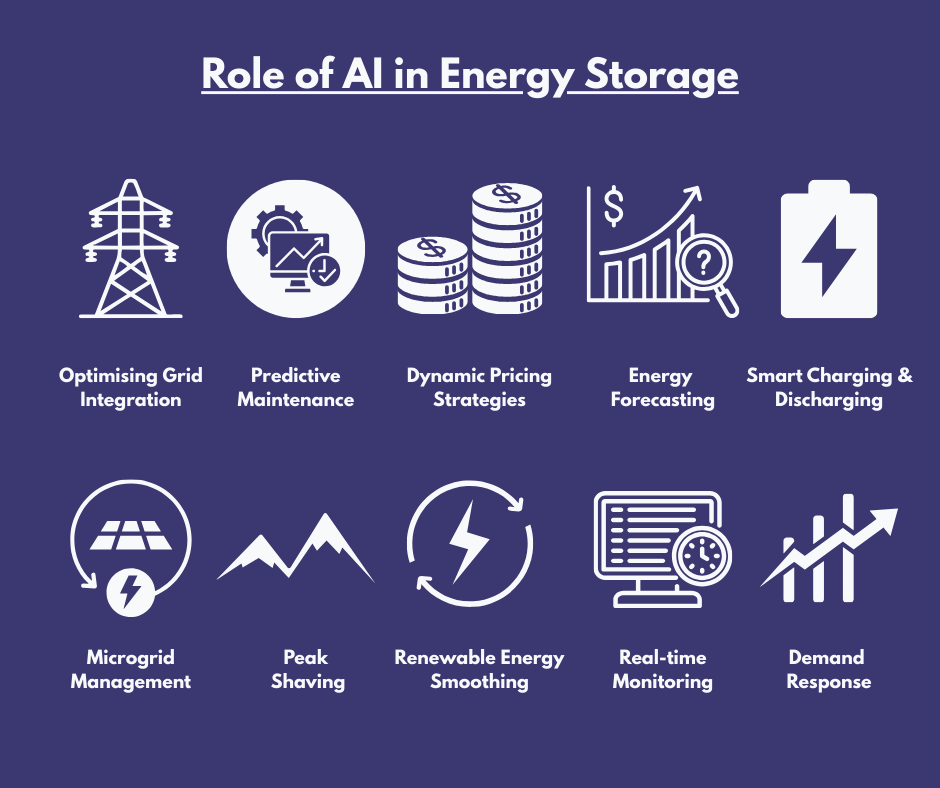
A recent review found that using AI to manage storage systems reduced operational costs by 12 percent and voltage fluctuations by up to 71 percent, transforming storage assets into a strategic, revenue-generating powerhouse.
Utilities can also use AI to orchestrate many small solar and storage assets into a large, flexible virtual power plant (VPP), turning variable generation into a grid-ready resource that unlocks new revenue streams.
AI for Installers and Electricians
Installers and electricians can use AI to plan installation better, deploy systems more quickly, reduce the resources needed to install solar panels and cut costs.
AI can help with labor-intensive tasks needed for the planning and operation of power projects, according to the Center on Global Energy Policy at Columbia University. Algorithms can recommend the optimal size and location of solar projects, perform complex calculations on topics such as weather patterns, and accelerate permitting processes. AI systems can use data from drones or satellites, such as roof size, sunlight hours or shading information, to optimize the solar panel layout.
Electricians can decrease errors and manual work with AI. Solar panel installation requires precise steps for wiring systems, placement of panels and inverter connection. AI can guide electricians through the process with step-by-step instructions, error detection and safety checks. It also determines the number of wires, which reduces the cost of project materials.
Solar Panel Manufacturing
Manufacturers can also use AI to improve their materials and processes.
AI is being used to run trials on new materials for solar panels, the Renewable Energy Institute said, which means manufacturers may not need as many rare earth metals in production. Enhanced processes developed using AI could reduce the temperatures needed to create solar panels, making the overall process cheaper and more sustainable. Panels should become more recyclable once fewer components are made of rare metals.
The US Department of Energy said AI is accelerating the discovery and development of innovative materials and designs, optimizing manufacturing processes, and reducing the time and cost of bringing new technologies to market. These enhancements include the co-design of materials and components, consideration of system-level requirements for grid integration, and lifecycle performance.
The IEA International Energy Agency similarly noted that AI can help with analyzing highly complex design spaces and balancing performance trade-offs. For example, AI could accelerate the process for discovery of a perovskite that is stable and easy to manufacture. Once they get to production, solar panel manufacturers can use AI and computer-vision systems to monitor manufacturing lines in real time, detect cell micro-cracks or string misalignments and optimize logistics, leading to solar module production that is leaner, faster, and higher quality.
AI is Essential for Solar
While AI does have high electricity usage, it also has benefits for the solar industry. At this point, leading industry players are already using AI to improve panel development, installation, energy production and storage. Grid operators can manage their production and VPPs better too. Laggards in AI usage risk being left behind. And as AI sophistication increases, there will be more opportunities for manufacturing with new materials and processes as well as refinement of site planning or installation that will cut costs and increase efficiency even further.
Showing 1 reaction