


The first community solar project in the US was in Washington state, and projects that have rolled out since then provide financial benefits to community members whether or not they have rooftop solar panels. While innovation has expanded the range of benefits, changes under consideration could change community solar significantly.
Community Solar Deliver Benefits
Community solar enables a diverse range of customers - including residents, businesses, and institutions - to subscribe to a shared solar project within their utility territory and receive direct credits on their electricity bills for the energy produced by their share, Yale University explained. The term “community solar” reflects the collective nature of these projects, which are designed to serve entire communities rather than just individual property owners. The installations can be on rooftops in the community or at a small solar site nearby.
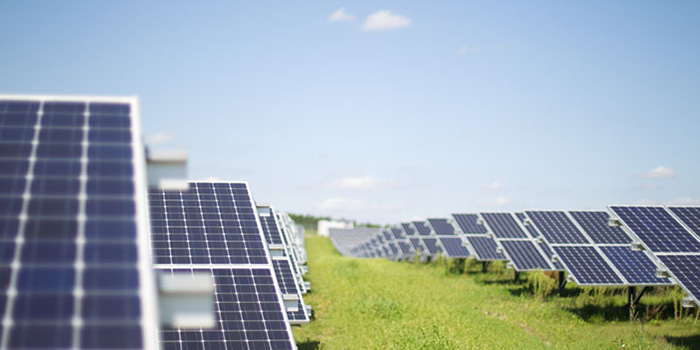 It enables households, businesses, schools or other organizations to access clean energy benefits and save an average of 10%-15% on their utility bills by subscribing to local projects, the Urban Infrastructure Lab (UIL) at the University of Washington (UW) added.
The way it works, the US Department of Energy (DoE) said, is that community solar subscribers typically receive a monthly bill credit for electricity generated by their share of the solar PV system, as if the system were located on their premises. The DoE said that in most cases, customers benefit from energy generated by solar panels at an off-site array.
There are Good Examples in Washington
The first community solar project in the United States was in Ellensburg, Washington in 2005, and a multitude of other projects have rolled out since then.
The Snohomish PUD Community Solar program at the Arlington Microgrid, for instance, has 8,100 solar energy units (each unit is 1/5th of a panel). Customers could participate for as little as $120 per unit to receive a monthly credit on their bill based on their unit’s production. In 2024, participants received $12.41 per unit.
Tacoma Public Utilities said it offered its first community solar project, four 75-kilowatt projects located at the TPU campus, in the winter of 2016. Participating customers were able to purchase a small portion of the project (a solar “unit”) that enabled them to receive an annual incentive payment, plus payment for the electricity produced by the project.
And in 2023, the Overcoming Solar Barriers for Multifamily Housing (OSBMH) project in Olympia was selected as a Grand Prize winner for the 2023 Sunny Awards for Equitable Community Solar, an initiative of the National Community Solar Partnership (NCSP), a program of the DoE. OSBMH provides more than 30% savings to all residences at the 82-unit Merritt Manor apartment building, which provides housing for low-income families.
Legislation in Washington Supported Community Solar, then Stalled
Looking more broadly in the United States, community solar has rolled out across America. 23 states plus the District of Columbia have policies that support community solar development, including Washington, the UIL said, and multiple states are advancing legislation to enable new programs. However, Washington is currently ranked 31st nationally in community solar development.
While the opportunity to scale community solar is enormous, in Washington and elsewhere, there are significant gaps between its technical potential and current deployment. The primary barriers to growth are not physical or technical limitations, the UIL observed. Instead, the challenges are related to technology adoption, market dynamics and policy design. The challenges include inconsistent state policies, complex interconnection standards, limited financing access and the absence of enabling mechanisms such as virtual net metering or consolidated billing.
Over the past several years, though, Washington has made progress in moving community solar forward. In 2022, the Washington State Legislature passed Second Substitute House Bill 1814 and Governor Jay Inslee signed the legislation. It directs the Washington State University (WSU) Energy Program to administer a community solar incentive program that provides $100 million in payments over 10 years for the development of projects no larger than 12kW that benefit low-income individuals, low-income service providers or qualifying tribal or public agencies. Through early August 2025, the program had pre-certified or certified $17.2 million in incentives, including 24 certified projects and 54 in precertification.
In early 2025, legislators introduced the Fair Access to Community Solar Act to enable the establishment of a more comprehensive community solar program in Washington However, the legislation did not move out of Committee.
Growth and Innovation in Solar
Cumulative installed community solar capacity in the U.S. reached a record 8.6 gigawatts (GW) as of 2024, according to Yale University, nearly doubling since 2021. Annual installations surged by 35% and hit 1.7 GW, primarily driven by policy innovations and increasing market demand in states such as New York, Illinois, and Maine. Data from NREL's Sharing the Sun project shows that about 91% of cumulative community solar capacity is located in just 10 states.
Several of the new installations of community solar in other states have provided benefits beyond just energy. In Maryland, for instance, Neighborhood Sun said one of the community solar farms it manages is located on the roof of a public school in Baltimore. Along with generating more than $1 million in savings for its subscribers, the project doubles as a job experience site through a solar installation occupational skills training program. Neighborhood Sun has been able to pass on nearly $9 million in savings on electricity bills to subscribers.
And in Clifton Park in New York, the Sugar Hill Solar Farm benefits both the environmental and local communities. US Light Energy said the facility produces 8.6 million kWh of clean energy for hundreds of subscribers annually. The 6.9 MW dc ground-mounted solar array includes nearly 20,000 solar modules. Beyond its energy output, the project emphasizes environmental stewardship, repurposing land for sustainable energy production and contributing carbon emission reductions.
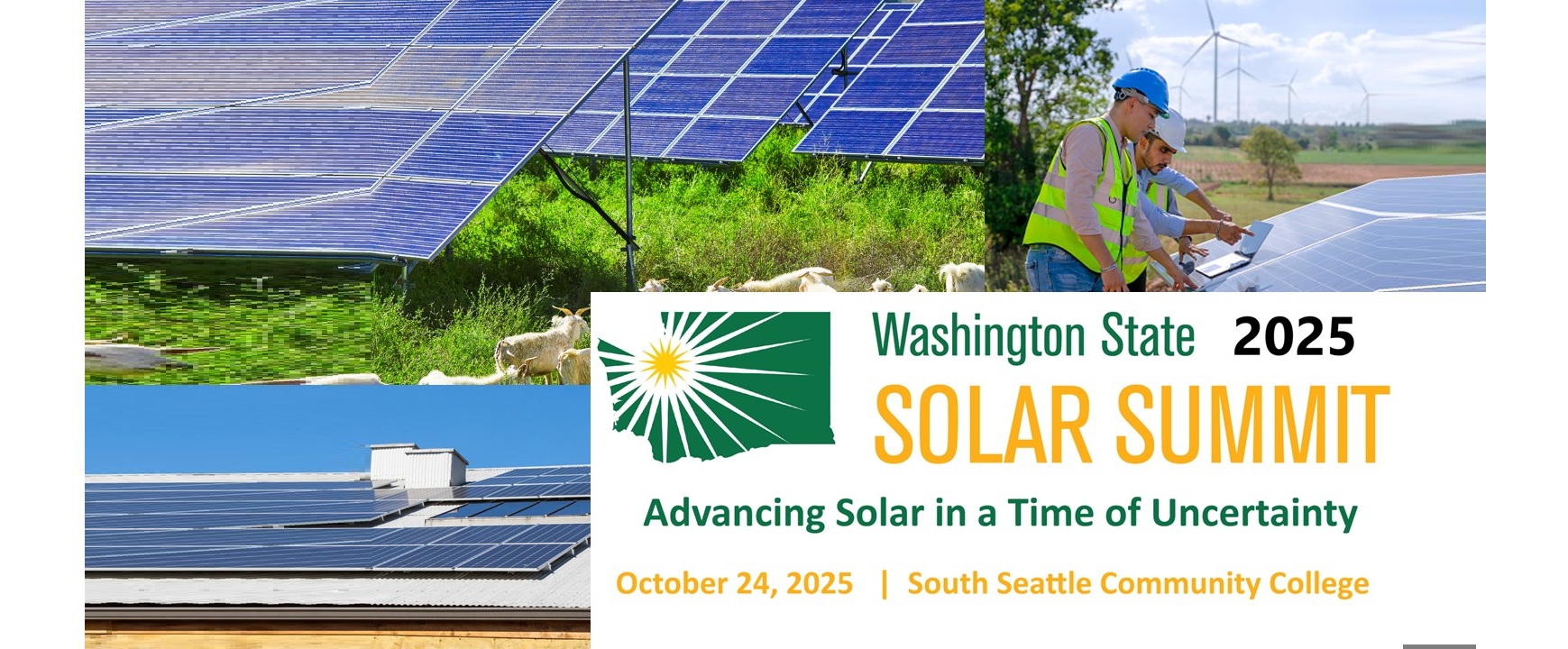
Despite that progress, changes in federal and local programs may shift the future direction of community solar. Participants in Solar Washington’s Solar Summit in October will hear about the latest updates in a panel discussion, “Deconstructing Community Solar in Washington for Broader Adoption.”
Showing 1 reaction