


Keynote Address
Kate Brouns, Senior Policy Advisor of Climate and Energy, The Office of the Governor
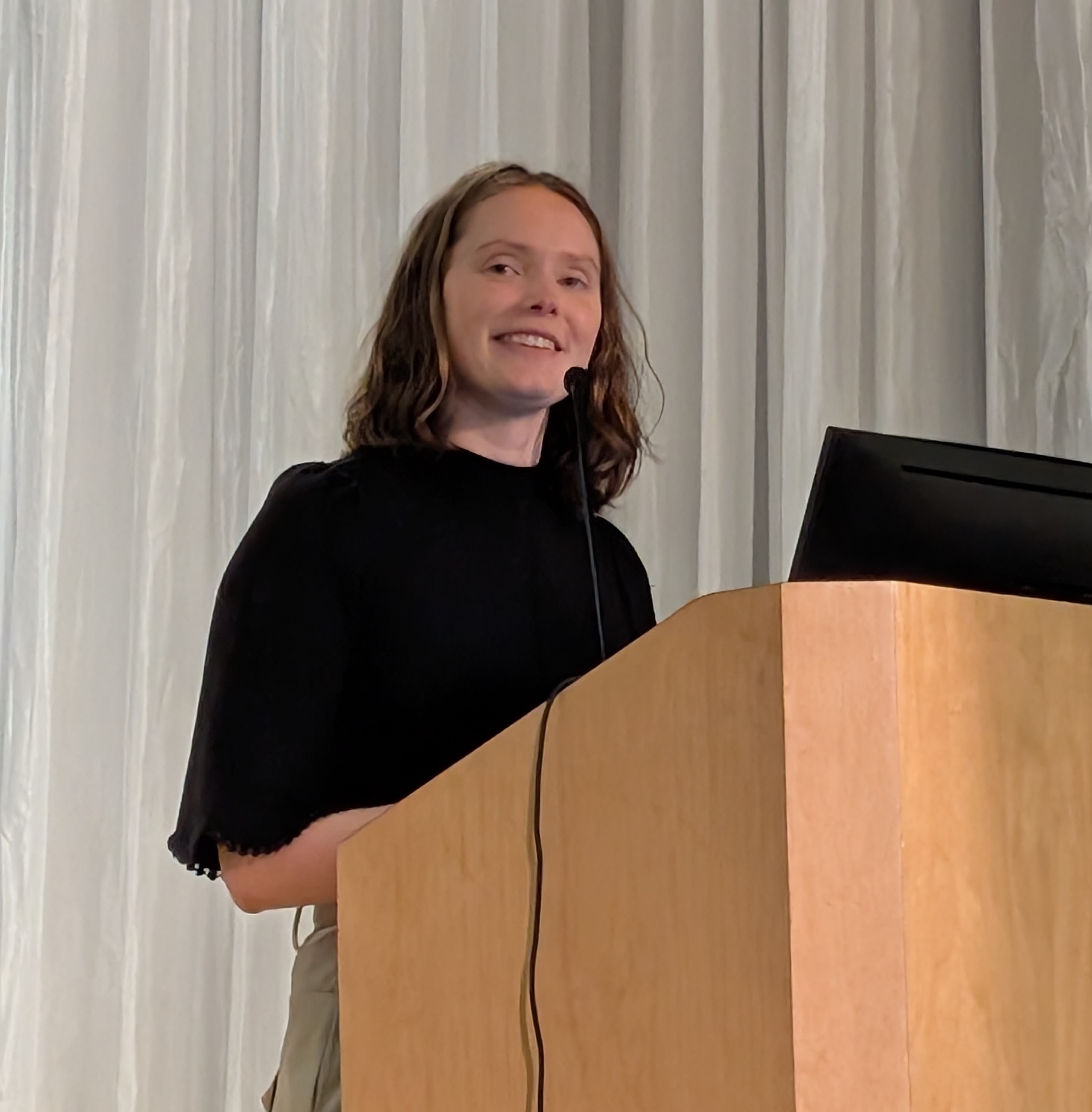
Kate started the keynote by saying she had spent the morning in a meeting with the governor's data center work group, which is taking a hard look at the competing trade-offs of data center growth, energy usage, potential environmental and tribal impacts, and tax incentives. Washington faces enormous load growth challenges, she said. Regionally, the Northwest Power and Conservation Council has projected that data centers and chip fabrication could add an average of 2.2 gigawatts of electricity load in the Pacific Northwest by 2030, though their high growth scenario shows that load increasing by about 4.8 gigawatts.
This situation is not unique to Washington. Many states are looking at what Washington is doing to navigate the growth of data centers because they face the same challenges. However, Washington is also dealing with a unique challenge. The transmission grid is not designed for the growth we have today. “We depend on Bonneville Power Administration (BPA) for 75 percent of our transmission infrastructure. The lead time required to plan, permit and construct high voltage transmission lines in Washington is 10 to 20 years. Some Washington counties suggest that building a gas pipeline might be faster than building a transmission line.”
Moreover, Washington is facing a historic multi-billion-dollar budget deficit that has worsened with each revenue projection. The federal government keeps rescinding billions of dollars in clean energy funding. There are also regulatory rollbacks and staffing cuts that include hundreds of employees at BPA.
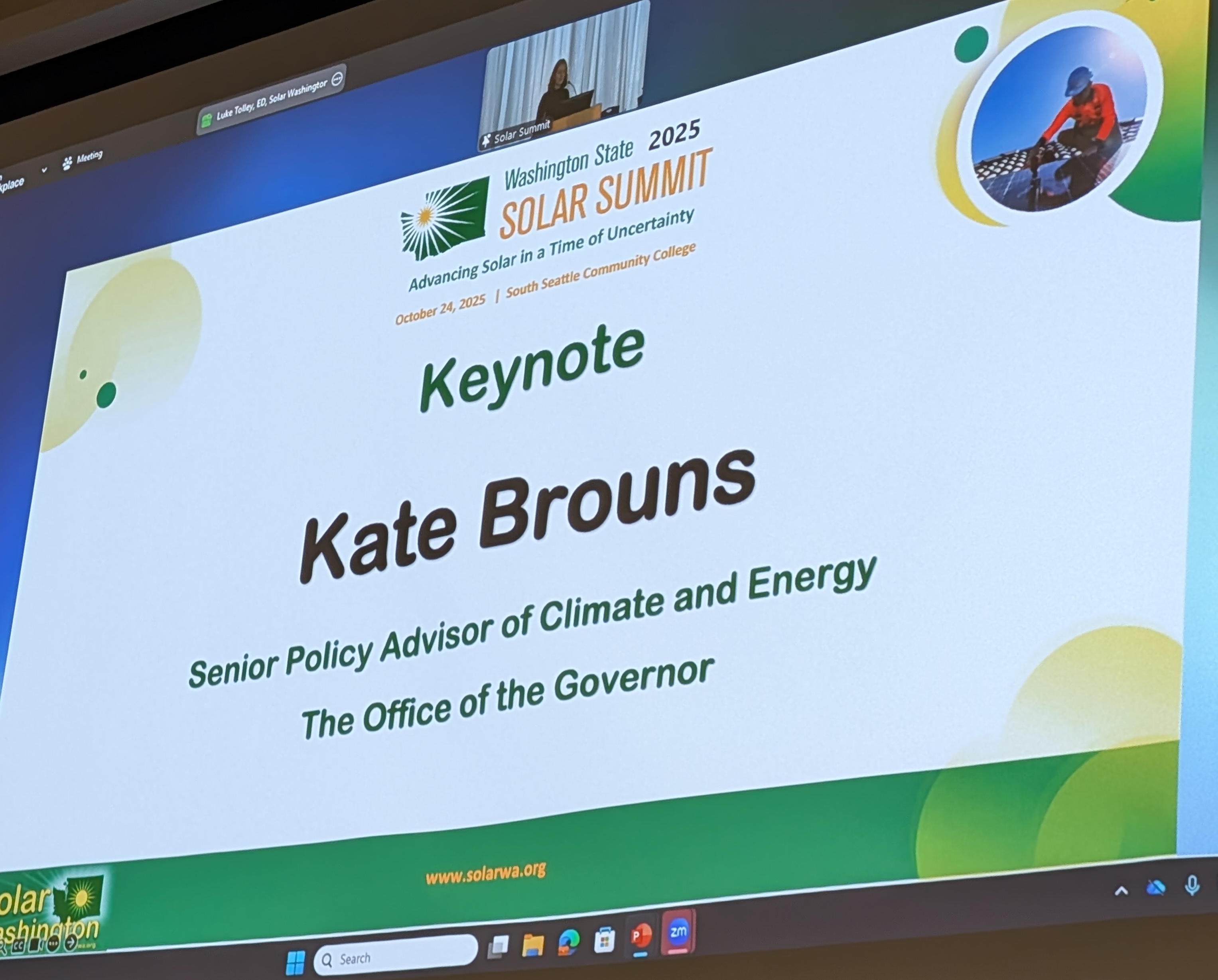
“All of us in this room are working towards building renewable energy, creating good paying jobs, advancing tribal energy sovereignty and environmental justice, and harnessing affordable power that is not dependent on the whims of a global oil market.”
There is another change that happened in the last 10 months, she said. Governor Inslee’s North Star was climate. Governor Ferguson has different priorities, and he faces different obstacles while trying to implement those same climate laws. “One example is the governor has staffed his office differently. There used to be two to three of me advancing climate energy and environmental justice. Now there's only one. We have to be more strategic.”
Three of Governor Ferguson's priorities are labor, affordability and protecting vulnerable Washingtonians. That's great news for solar energy because it enables all of those things to happen. Solar is reducing greenhouse gas emissions, creating much-needed jobs for electrical workers, and protecting communities or tribal nations from emergency weather events.
She also talked about positive changes she sees. On his first day on the job, Governor Ferguson signed an executive order to cut down permitting processing times across state agencies. In February, the governor committed his administration to continuing to serve on the executive committee of the US Climate Alliance. In May of 2026, Washington will once again become the co-chair of the Climate Alliance. In May, the governor signed Senate Bill, 5445, which removes regulatory hurdles to advancing agrivoltaics and streamlines the permitting of certain distributed solar facilities. In June, the Department of Ecology finished programmatic environmental impact statements for solar, wind, co-located battery storage and green hydrogen, attempting to streamline the environmental review process. In September, Commerce announced $41 million in clean energy community grant awards. Just this month, the US Supreme Court declined to hear a challenge of the Climate Commitment Act (CCA).
“The CCA has continued to bring in robust climate and decarbonization funding. We also are refusing to let go of the funding and regulation that the federal government has tried to strip away. Our Attorney General's Office has filed eight Climate and Energy lawsuits alone against the federal administration. All of those actions give me hope that our state is continuing to step up to address this challenge.”
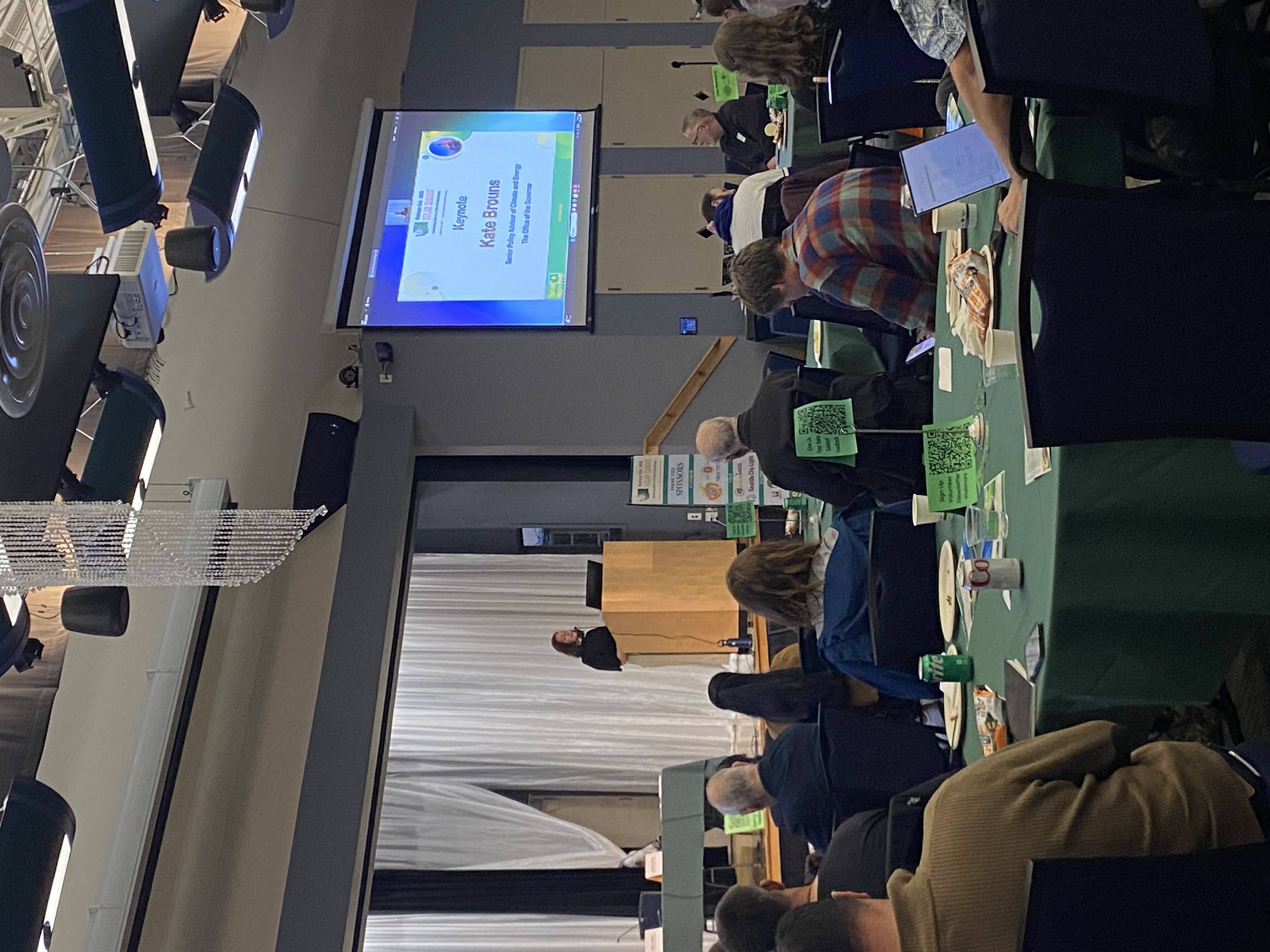
She also talked about what the governor's office is prioritizing. “Our state agencies are working to get existing clean energy projects in the permitting pipeline across the finish line and begin construction before federal tax credits expire. We are beginning conversations with tribal leaders to see how we can have a more transparent, ongoing and meaningful on clean energy siting. In 2026, we are hoping to unlock bottlenecks in our grid and allow more clean energy projects to interconnect faster. Transmission is the enabler to much of the climate work we need to do in Washington.”
“I have a lot of hope for this year,” she said. “We can still absolutely make progress.”
Kate then answered questions from participants at the Summit.
In response to a question on the two “day ahead” markets coming to Washington State, she said Governor Ferguson and Governor Kotek of Oregon sent a joint letter to the Bonneville Power Administration to urge BPA to reconsider their decision about which day ahead market they're pursuing. If there are two competing day ahead markets in Washington, there will be two overlapping markets and different entities operating, which leads to higher costs because the administrative burden is more complex than having one day ahead market.
On the topic of virtual power plants, she said “we need to do be doing more. Our utilities and Transportation Commission and our Energy Office at Commerce have been looking a lot into virtual power plants and how we incentivize it.”
A participant asked how many data centers will be built in Washington and how to keep the energy for those centers as renewable as possible. She said “we are sending a series of recommendations to the governor's desk in early December. Some of the main things we have been voting on are rate payer protections (and) how we improve load forecasting. It is challenging for our utilities to know how much data center growth will actually come online, because sometimes we see duplicative interconnection requests. We also don't have a commercial readiness standard. There is no confirmation that it will actually be built. We're ending up with load forecasts that are speculative. We are hoping in 2026 we can nail down a more uniform process. We are trying to find a way to incentivize data centers to bring their own clean energy to the grid to help with our power challenges. Another idea is incentivizing things that could reduce the power that data centers bring. We're also looking at how we incentivize better energy efficiency of the systems, better water efficiency. The problem is that the tax and existing tax incentive in Washington does not have those requirements.”
Asked about vulnerabilities in the CCA funding, she said the governor has not started looking at budget proposals yet. However, there are stipulations in law about how Climate Commitment Act dollars have to be used.
She was also asked whether there is an effort to consider valuation of land use from energy systems on brownfield sites, built environments, agile tanks, and so forth. She said the most recent conversation she has had was about Senate Bill 5445, which accelerates the permitting of solar being built on these previously used sites, and a way to incentivize that and agrivoltaics. “It is a question about how best we use our natural lands, and where the best places are to be siting these systems.”
Participants applauded Kate for sharing her insights on the path ahead for solar.
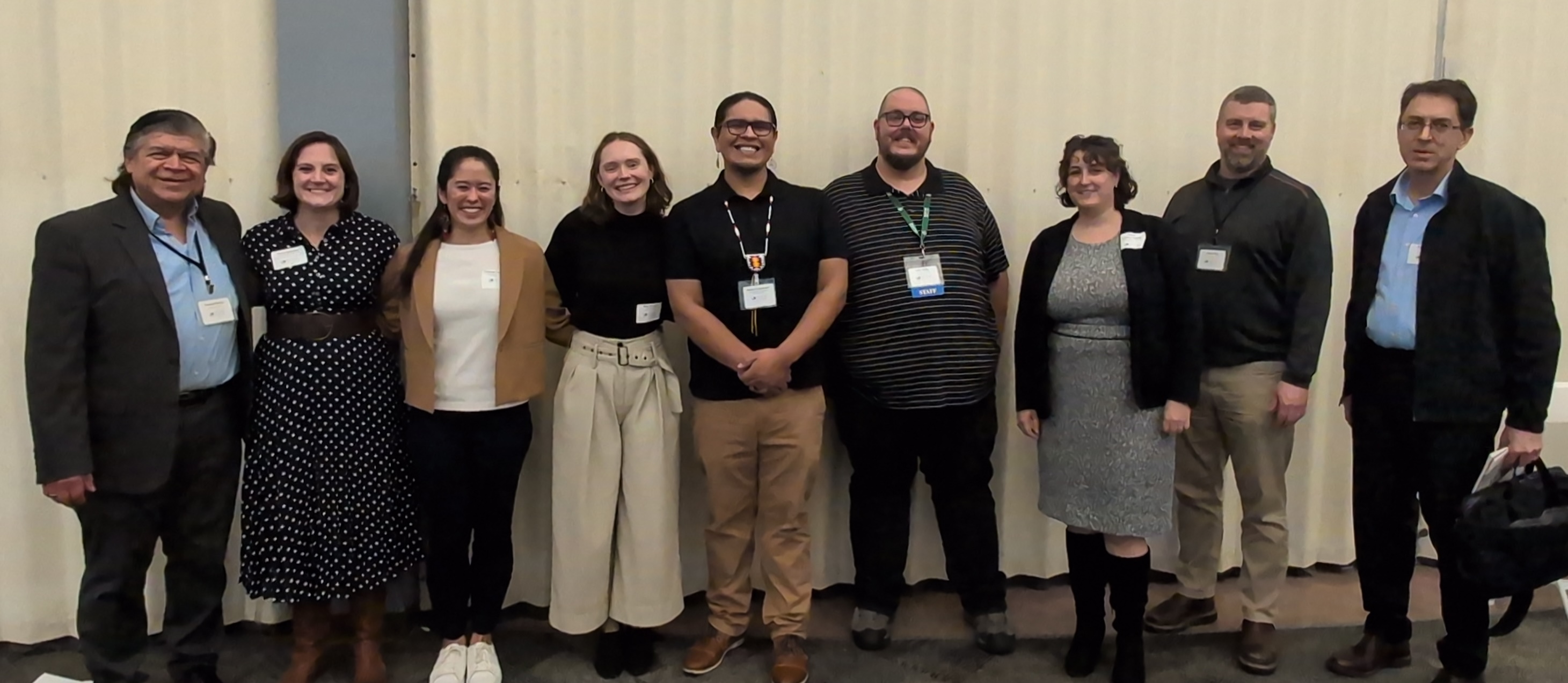
*Kate Brouns with Solar Washington board members, from right to left: Thomas Honles, Nora Hawkins, Charlee Thompson, Kate Brouns, Dayne Goodheart, Luke Tolley-SW Executive Director, Dever Haffner-Ratliffe, Shane Frye, Chris Brown.
Showing 1 reaction